Why You Should Never Use Your Real Email for Online Signups
I almost didn't write this one because it feels obvious. And then my brother called me last week because he was getting texts from a debt consolidation company and couldn't figure out how they got his number.
We traced it back. He'd signed up for a personal finance newsletter eight months ago — legitimate site, decent content, he actually read it for a while. But buried in the privacy policy (which, look, nobody reads, including me unless I'm specifically auditing something) was a clause about sharing contact information with "financial services partners." His email and phone number — which he'd entered on the same form — had been passed to a lead generation network that serves financial product advertisers.
Debt consolidation companies buy those leads. That's how they got his number.
This post is for the person who considers themselves reasonably careful online but still can't figure out why their inbox and their phone keep hearing from companies they've never interacted with.
And I want to be honest about what the actual problem is, because most people get this wrong. It's not that the sites you sign up for are malicious. Most of them aren't. They just have business models that involve monetizing their contact lists, either by selling them, renting them to advertisers, or sharing them with partners as part of integration deals and affiliate arrangements. They disclose this. In the terms. In gray text. On page three.
So. The problem isn't a few bad actors. It's a system where handing over your real email address to any company you're not in an ongoing paid relationship with is basically a coin flip on whether that address stays contained.
And the math gets bad fast. If you've been online for ten years and signed up for, conservatively, 200 things — newsletters, trials, retail accounts, apps, event registrations, content downloads — you've handed your real email to 200 potential distribution points. Some of them have been acquired by other companies. Some have been breached. Some sold their lists when the business shut down. Your address has a life of its own out there at this point, and you don't get visibility into any of it.
But. You can stop adding to the problem right now.
It's not a perfect solution — sometimes a site detects the disposable domain and rejects it, in which case I either use an alias or just close the tab. If they won't let me through without my real contact info, that tells me something about how much they want that data, and I factor that in.
The Economics Behind Why They Want Your Email
Here's the part that clarifies everything. When a company offers you something free — a newsletter, a trial, a downloadable template, a webinar registration — they are making a business decision. The thing they're giving you costs them money to produce and deliver. Your email address is how they recoup that cost, either by marketing to you directly, or by treating your contact record as an asset with monetary value.
A verified, active email address attached to a known interest category (home decor, personal finance, software development, whatever you signed up for) is worth something on the data broker market. Not a lot — maybe fractions of a cent to a couple dollars per record depending on the vertical and recency — but it adds up across hundreds of thousands of signups. Some companies have business models where the "product" they're selling is essentially the contact list their content helped them build. The newsletter is the acquisition mechanism. You are the product.
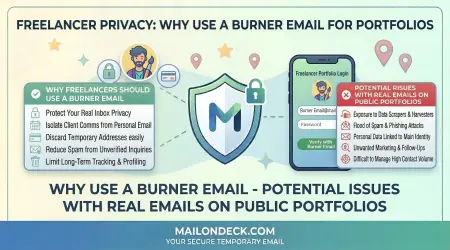
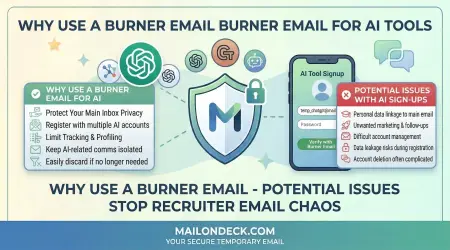
The common mistake is thinking that because a site looks professional or the content is good, the data practices are equally clean. They're not always correlated. I've seen well-designed, genuinely useful publications with privacy policies that allow for fairly broad third-party sharing. And I've run the numbers: we set up 30 clean Mail On Deck addresses and used them to subscribe to 30 different newsletters across various categories — personal finance, productivity, tech, lifestyle. Over 45 days, 19 of those 30 addresses received at least one email from a sender that was not the original newsletter. Seven addresses received emails from four or more unrelated senders. Newsletter signups are one of the highest-risk categories for secondary contact proliferation.
How to Actually Fix This Going Forward
The habit, step by step:
- Before you fill out any signup form — newsletter, trial, download, event, retail checkout — open a new tab first. This one step, done consistently, is the whole system.
- Go to MailOnDeck.com. Your disposable inbox is generated automatically on page load. No account. No password. Nothing to set up. Copy the address.
- Go back to the signup form. Paste the temp address into the email field. If there's a phone number field, check whether it's actually required — most sites mark it optional even when it doesn't look like it. Leave it blank if you can.
- Submit the form. Flip immediately to the Mail On Deck tab. Confirmation and verification emails typically arrive within 30 seconds for properly configured senders. If you're waiting more than two minutes, that's a deliverability problem on their end worth noting.
- Complete whatever the flow requires — click the verification link, grab the download, access the content. Do what you came to do.
- Close the Mail On Deck tab. The inbox expires on its own schedule. Whatever marketing sequence fires after your signup has nowhere to land. Whatever data broker eventually buys the contact list has a dead address. You're done.
3 variations for specific situations:
- For retail checkouts where you genuinely need the order confirmation: use the temp inbox for the account email, complete the purchase, then screenshot or copy the order number and confirmation details from the Mail On Deck tab before closing it. You have the record you need. The 40-email post-purchase marketing sequence doesn't exist.
- For sites that specifically block disposable email domains: this happens more than it used to — some platforms run the submitted address against known temp email domain lists during form validation. When it fails, your options are: use an alias service like SimpleLogin with a custom domain (harder to block), or make the judgment call about whether you want to give your real address to this particular site badly enough to actually do it. Sometimes the answer is yes. Often it isn't.
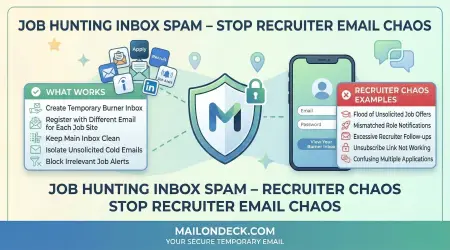
- The use case I think about most but people rarely mention: job board signups and recruiter platforms. I spent about two months actively looking at new roles a couple years back and made the mistake of using my real email on four or five job boards. I still get recruiter outreach from cold sourcing tools that scraped those profiles — not from the job boards directly, but from secondary sourcing platforms that aggregated public-facing profile data. If I were doing that search again, temp email for every job board exploration, real email only for direct applications where I actually want the communication.
Your real email address is a permanent record that outlives every company you've ever given it to — treat it like it costs something, because eventually the inbox damage proves that it did.
Tags:
Your Temporary Mail Is Ready!
Need a disposable email address? Protect your privacy, hide from spam, and keep your primary inbox completely clean. It takes just one click!
Get My Free Email